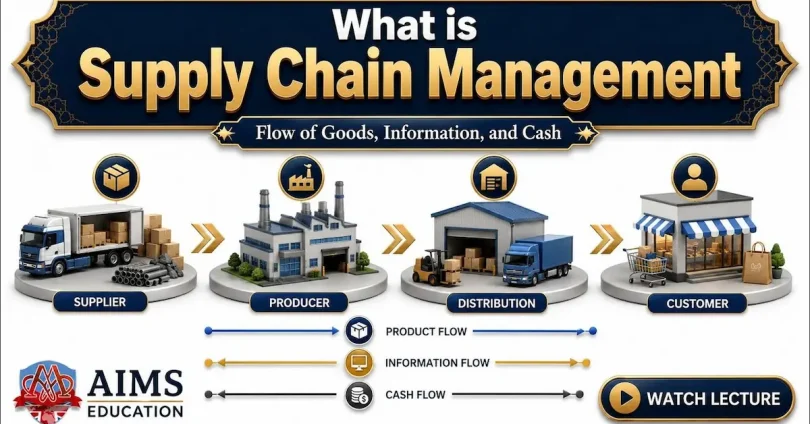

In today’s fast-moving business world, getting products from suppliers to customers in the right way is very important. Every product goes through a series of steps like sourcing raw materials, production, storage, and delivery before it reaches the final customer
This entire process is called supply chain management. It plays a key role in making sure businesses run smoothly, products are delivered on time, and costs are kept under control
Understanding supply chain management basics is essential for businesses of all sizes because it helps improve efficiency, reduce delays, and increase customer satisfaction
In this article, you will learn what supply chain management is, how it works, its key components, benefits, and why it is so important for business success in 2026
What Is Supply Chain Management?
Supply chain management (SCM) is the process of managing the flow of goods, services, and information from the raw material stage all the way to the final customer
In simple words, it is how a product is planned, made, stored, and delivered to the customer in an efficient and organized way
Simple Meaning
Supply chain management means making sure the right product is available in the right place, at the right time, and at the right cost
What It Includes
Supply chain management involves several important activities such as:
- Sourcing raw materials from suppliers
- Manufacturing or production of goods
- Storing products in warehouses
- Managing inventory levels
- Transporting goods to different locations
- Delivering products to customers
Purpose of Supply Chain Management
The main purpose of SCM is to ensure smooth business operations by reducing delays, lowering costs, and improving product delivery
How It Connects Businesses
Supply chain management connects suppliers, manufacturers, warehouses, transport companies, and customers into one complete system
Why It Matters
Without proper supply chain management, businesses may face delays, higher costs, poor product availability, and unhappy customers
Important for All Industries
Supply chain management is used in almost every industry including retail, manufacturing, ecommerce, healthcare, and logistics
Overall, supply chain management is a critical process that helps businesses operate efficiently, deliver products on time, and achieve long-term success in 2026
you may also like to read these posts;
AI Business Automation Tips for Faster Growth 2026
Marketing Automation Guide 2026 Boost Sales Fast
Small Business Automation Guide for 2026 Growth & Success
How to Automate Business Tasks in 2026
Workflow Automation Software Guide for 2026
How Supply Chain Management Works
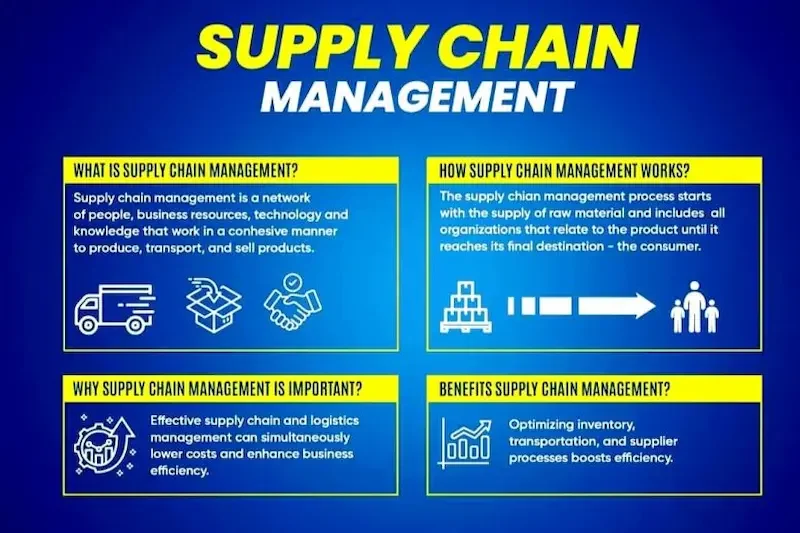
Supply chain management works as a complete step-by-step process that moves a product from raw materials to the final customer in an organized and efficient way
1. Planning
The process starts with planning where businesses forecast demand, set goals, and decide how many products need to be produced to meet customer needs
2. Sourcing Raw Materials
In this step companies select suppliers and purchase raw materials needed to create products. Good supplier selection ensures quality and cost control
3. Manufacturing or Production
Raw materials are converted into finished products through manufacturing. This step focuses on maintaining quality, efficiency, and timely production
4. Warehousing and Storage
After production, products are stored in warehouses safely until they are ready to be shipped. Proper storage helps manage inventory and avoid damage or loss
5. Inventory Management
Businesses track stock levels to ensure products are available when needed without overstocking or shortages. This helps balance supply and demand
6. Transportation and Logistics
Products are transported from warehouses to retailers or directly to customers. This step ensures safe and timely delivery using trucks, ships, or air transport
7. Distribution and Delivery
In the final step, products are delivered to customers or stores. Fast and reliable delivery improves customer satisfaction and business reputation
8. Returns and Customer Support
Some supply chains also handle product returns, exchanges, and customer service to maintain trust and improve customer experience
Overall supply chain management works as a connected system where each step depends on the other to ensure smooth production, efficient delivery, and satisfied customers in 2026
Key Components of Supply Chain Management
Supply chain management is made up of several important components that work together to ensure products move smoothly from suppliers to customers
1. Planning
Planning is the first and most important step where businesses forecast demand, set goals, and decide how to manage resources efficiently
2. Sourcing
Sourcing involves selecting reliable suppliers and purchasing raw materials at the best quality and cost. Strong supplier relationships are key for smooth operations
3. Manufacturing
This is the production stage where raw materials are converted into finished products. It focuses on quality control, efficiency, and timely production
4. Inventory Management
Inventory management ensures that businesses have the right amount of stock available at the right time without overstocking or running out of products supply chain management basics
5. Warehousing
Warehousing involves storing finished goods safely until they are ready for distribution. Proper storage helps protect products and manage stock efficiently
6. Logistics and Transportation
This component deals with moving products from warehouses to customers or retailers. It ensures safe, fast, and cost-effective delivery
7. Distribution
Distribution is the process of delivering products to the final destination whether it is a retail store or directly to customers supply chain management basics
8. Customer Service
Customer service handles customer support, returns, and feedback to improve satisfaction and build trust supply chain management basics
9. Information Flow
Information flow connects all parts of the supply chain by sharing data such as orders, inventory levels, and delivery status in real time
10. Technology Integration
Modern supply chains use software, automation, and analytics tools to improve accuracy, speed, and decision-making supply chain management basics
Together, these components create a strong and efficient supply chain system that helps businesses reduce costs, improve delivery, and achieve better performance in 2026
Why Supply Chain Management Is Important
Supply chain management is very important for every business because it ensures that products move smoothly from production to customers without delays, extra costs, or quality issues
Improves Efficiency
It helps businesses organize their operations in a better way, making production, storage, and delivery faster and more efficient
Reduces Costs
Good supply chain management helps reduce unnecessary expenses in transportation, storage, and production by improving supply chain management basicsplanning and resource use
Ensures Timely Delivery
It makes sure products reach customers on time, which improves customer satisfaction and builds trust in the business
Improves Customer Satisfaction
When products are delivered quickly and in good condition, customers are happier and more likely to return supply chain management basics
Better Inventory Management
Supply chain management helps businesses keep the right amount of stock, avoiding both shortages and overstocking
Supports Business Growth
A strong supply chain allows businesses to scale easily and handle more orders without confusion or delays supply chain management basics
Improves Product Quality
Better coordination between suppliers and manufacturers helps maintain consistent product quality supply chain management basics
Increases Competitive Advantage
Businesses with strong supply chains can deliver faster, reduce costs, and perform better than competitors in the market
Helps Manage Risks
It helps identify and solve problems like delays, supply shortages, or transportation issues before they affect business operations
Improves Coordination
Supply chain management connects suppliers, manufacturers, warehouses, and customers into one smooth system for better communication and workflow supply chain management basics
Overall, supply chain management is essential because it helps businesses operate smoothly, reduce costs, improve delivery, and achieve long-term success in 2026
Benefits of Supply Chain Management

Supply chain management provides many important benefits that help businesses run smoothly, reduce costs, and improve customer satisfaction supply chain management basics
Faster Delivery
It helps businesses deliver products quickly and efficiently, which improves customer experience and trust supply chain management basics
Cost Reduction
Supply chain management reduces unnecessary expenses in production, transportation, and storage by improving planning and efficiency
Better Inventory Control
It helps businesses maintain the right stock levels, avoiding overstocking and product shortages supply chain management basics
Improved Efficiency
All business operations become more organized and smooth, from sourcing raw materials to final delivery
Higher Customer Satisfaction
Fast delivery, good product quality, and reliable service lead to happier and more loyal customers supply chain management basics
Better Supplier Relationships
Strong communication and coordination with suppliers help ensure steady supply and better product quality
Improved Profitability
By reducing waste and controlling costs, businesses can increase their overall profit margins supply chain management basics
Better Decision Making
Supply chain data helps businesses make smarter decisions about production, pricing, and logistics
Increased Business Flexibility
Companies can quickly adapt to market changes, demand fluctuations, and supply issues supply chain management basics
Strong Competitive Advantage
Businesses with efficient supply chains can deliver better service than competitors and grow faster in the market
Overall, supply chain management is essential for improving efficiency, reducing costs, and ensuring long-term business success in 2026
What is supply chain management?
Supply chain management is the process of managing the flow of goods, services, and information from raw materials to the final customer
Why is supply chain management important?
It is important because it improves efficiency, reduces costs, ensures timely delivery, and increases customer satisfaction
What are the main components of supply chain management?
The main components include planning, sourcing, manufacturing, inventory management, logistics, and customer service
Conclusion
Supply chain management is a vital part of every business that ensures products move smoothly from raw materials to the final customer
It helps businesses improve efficiency, reduce costs, manage inventory, and deliver products on time while maintaining quality
By understanding and applying supply chain management basics, companies can strengthen operations, improve customer satisfaction, and grow successfully
In 2026, businesses that use strong supply chain management systems will have a clear advantage in performance, speed, and long-term success