
In today’s fast-paced business environment, companies need a smooth and efficient supply chain process to deliver products quickly, reduce costs, and meet customer expectations
The supply chain process connects all stages of a product journey including planning, sourcing, manufacturing, inventory management, logistics, and final delivery to customers supply chain process guide
A well-structured supply chain process helps businesses improve efficiency, avoid delays, manage resources better, and ensure products reach customers on time
As competition continues to grow in 2026, businesses must optimize their supply chain processes to stay competitive, increase productivity, and improve customer satisfaction
In this guide, you will learn the complete supply chain process step by step, its key components, benefits, challenges, and best practices for modern businesses
What Is the Supply Chain Process?
The supply chain process is the complete series of steps involved in creating a product and delivering it from raw materials to the final customer supply chain process guide
It covers everything from planning and sourcing materials to manufacturing, storing inventory, transporting goods, and delivering products to customers
Simple Meaning
In simple words, the supply chain process is how a product moves step by step from suppliers to customers in an organized and efficient way supply chain process guide
Main Purpose of the Supply Chain Process
The main purpose is to ensure products are made and delivered on time, at the right cost, and in the right quantity while reducing waste and improving efficiency
How the Supply Chain Process Works
The process works through a connected flow of activities such as planning demand, sourcing materials, producing goods, managing inventory, and delivering orders to customers supply chain process guide
Real-Life Example
For example, when you order a mobile phone, raw materials are first sourced, then the phone is manufactured, stored in a warehouse, shipped through logistics, and finally delivered to your home supply chain process guide
Key Features of the Supply Chain Process
- Connected business operations
- Smooth product flow
- Coordination between suppliers, manufacturers, and customers
- Use of logistics and transportation systems
- Inventory and order management
Importance in Modern Business
The supply chain process is very important because it helps businesses operate efficiently, reduce costs, and ensure fast and reliable delivery supply chain process guide
Industries That Use It
Almost every industry uses the supply chain process including ecommerce, retail, manufacturing, healthcare, food, and logistics
Role in Business Success
A well-managed supply chain process helps businesses improve productivity, increase customer satisfaction, and achieve long-term growth supply chain process guide
Overall, the supply chain process is the backbone of modern business operations that ensures products move smoothly from suppliers to customers in 2026 supply chain process guide
you may also like to read these posts;
AI Business Automation Tips for Faster Growth 2026
Marketing Automation Guide 2026 Boost Sales Fast
Small Business Automation Guide for 2026 Growth & Success
How to Automate Business Tasks in 2026
Workflow Automation Software Guide for 2026
Steps in the Supply Chain Process
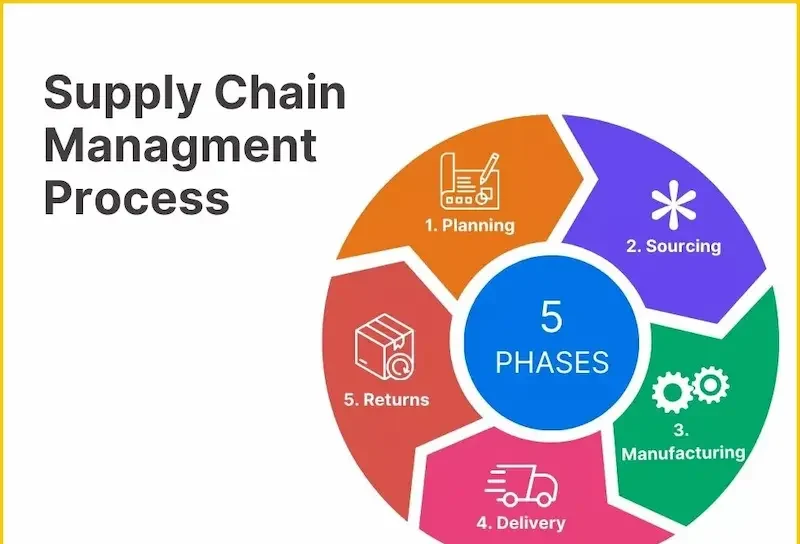
The supply chain process includes several important steps that work together to move products from suppliers to customers in an organized and efficient way supply chain process guide
1. Planning
Planning is the first step where businesses analyze customer demand, set goals, and plan resources. It helps ensure smooth operations and avoids shortages or overproduction
2. Sourcing
In this step, businesses select suppliers and purchase raw materials or products needed for manufacturing. Strong supplier relationships are important for reliable sourcing supply chain process guide
3. Manufacturing
Raw materials are converted into finished products during the manufacturing stage. This step includes production, assembly, and quality checking supply chain process guide
4. Inventory Management
Finished products are stored in warehouses and tracked carefully. Businesses monitor stock levels to avoid overstocking or running out of products supply chain process guide
5. Order Processing
When customers place orders, the system records them, verifies details, and prepares products for shipment supply chain process guide
6. Warehousing
Products are stored safely in warehouses until they are ready to be shipped. Proper storage ensures product quality and easy access
7. Transportation
Products are moved from warehouses to customers or retail locations using logistics systems. Efficient transportation reduces delivery time and costs
8. Delivery
This is the final step where products are delivered to customers safely and on time. Fast and accurate delivery improves customer satisfaction
9. Returns Management
If customers return products, the system handles inspection, restocking, replacement, or refunds depending on the condition of the item
10. Monitoring and Improvement
Businesses continuously monitor supply chain performance using data and analytics to improve efficiency and reduce costs over time supply chain process guide
Overall, these steps work together to create a smooth supply chain process that helps businesses deliver products efficiently, reduce costs, and improve customer satisfaction in 2026
Key Components of the Supply Chain Process
The supply chain process is made up of several important components that work together to ensure products move smoothly from suppliers to customers supply chain process guide
Supplier Management
Supplier management involves selecting, coordinating, and maintaining strong relationships with suppliers to ensure a steady flow of raw materials and products supply chain process guide
Procurement (Sourcing)
This component focuses on purchasing raw materials, goods, or services needed for production at the right price, quality, and time
Manufacturing and Production
This is the stage where raw materials are transformed into finished products through production, assembly, and quality control processes supply chain process guide
Inventory Management
Inventory management helps businesses track, store, and control stock levels to avoid shortages, overstocking, and wastage
Warehousing
Warehousing involves storing products safely in organized facilities until they are needed for distribution or delivery
Logistics and Transportation
This component manages the movement of goods from one location to another, ensuring timely and cost-effective delivery
Order Management
Order management handles customer orders from placement to fulfillment, ensuring accuracy and speed in processing
Demand Forecasting
Demand forecasting uses data and trends to predict future customer demand and help businesses plan inventory and production effectively supply chain process guide
Distribution Management
This focuses on delivering products to customers, retailers, or distributors through efficient channels and networks
Returns Management (Reverse Logistics)
This process handles returned products, including inspection, restocking, repair, or disposal supply chain process guide
Information and Data Management
Modern supply chains rely on real-time data, analytics, and software systems to track performance and improve decision-making
Customer Service
Customer service ensures smooth communication, handles inquiries, and resolves issues related to orders and deliveries supply chain process guide
Technology and Automation
Technology plays a key role in improving efficiency through automation, tracking systems, AI tools, and cloud-based supply chain platforms
Risk Management
Risk management identifies potential disruptions such as supplier delays, transportation issues, or demand changes and prepares solutions to minimize impact
Sustainability Practices
This component focuses on reducing waste, improving energy efficiency, and using eco-friendly processes in the supply chain
Together, these components ensure that the supply chain process runs smoothly, efficiently, and supports business growth, customer satisfaction, and cost reduction in 2026
Benefits of Supply Chain Process

A well-structured supply chain process helps businesses run smoothly, reduce costs, and deliver better service to customers. It also improves coordination between suppliers, manufacturers, and logistics teams
Improved Operational Efficiency
A strong supply chain process connects all activities smoothly, reducing delays and improving overall business performance
Lower Production and Delivery Costs
Better planning, optimized transportation, and efficient storage help reduce unnecessary expenses across the supply chain
Faster Order Fulfillment
Products move quickly from production to customers, ensuring faster order processing and delivery times
Better Inventory Accuracy
Businesses can track inventory in real time, reducing errors, stock mismatches, and product shortages
Stronger Customer Loyalty
Fast delivery, correct orders, and reliable service increase customer trust and encourage repeat purchases
Real-Time Visibility
Companies can monitor every stage of the supply chain, from sourcing to delivery, for better control and decision-making
Improved Demand Planning
Accurate forecasting helps businesses prepare the right amount of stock and avoid overproduction or shortages
Reduced Waste
Efficient supply chain management minimizes unused inventory, expired goods, and unnecessary resource usage
Better Supplier Coordination
Strong supplier relationships ensure timely delivery of raw materials and consistent product quality
Increased Business Scalability
A well-organized supply chain allows businesses to handle more orders and expand into new markets easily
Enhanced Decision Making
Data-driven insights help businesses make smarter decisions about purchasing, production, and logistics
Reduced Lead Time
Efficient processes shorten the time between order placement and product delivery
Improved Risk Management
Businesses can quickly respond to disruptions like supplier delays, transportation issues, or demand changes
Higher Profit Margins
Lower costs and improved efficiency lead to better profitability for businesses
Better Warehouse Efficiency
Organized storage systems and automation improve picking, packing, and shipping speed
Increased Flexibility
Businesses can quickly adapt to changing customer demands and market conditions
Improved Communication
Clear coordination between all supply chain stages reduces misunderstandings and errors
Strong Competitive Advantage
Companies with efficient supply chain processes can offer better prices and faster service than competitors
Better Use of Technology
Modern tools like automation, AI, and cloud systems improve accuracy and speed across operations
Environmental Benefits
Optimized routes and reduced waste help create a more sustainable and eco-friendly supply chain
Improved Customer Experience
Smooth operations ensure customers receive products on time with fewer errors or delays
Better Cash Flow Management
Efficient inventory control reduces unnecessary spending and improves financial stability
Overall, the supply chain process provides long-term benefits that help businesses grow, stay competitive, and operate efficiently in 2026
What is the supply chain process?
The supply chain process is the series of steps involved in producing and delivering products from suppliers to final customers
What are the main steps in the supply chain process?
The main steps include planning, sourcing, manufacturing, inventory management, warehousing, transportation, delivery, and returns
Why is the supply chain process important?
It is important because it improves efficiency, reduces costs, ensures faster delivery, and increases customer satisfaction
Conclusion
The supply chain process is a vital part of modern business operations that ensures products move smoothly from suppliers to customers in an efficient and organized way
By following a structured process that includes planning, sourcing, manufacturing, inventory management, logistics, and delivery, businesses can reduce costs, improve efficiency, and enhance customer satisfaction
A well-managed supply chain process also helps companies respond quickly to market changes, manage resources better, and reduce operational risks
In 2026, businesses that optimize their supply chain processes will be more competitive, more productive, and better prepared for long-term growth and success