
In today’s competitive business environment, companies often rely on multiple vendors and suppliers to manage their operations smoothly. From raw materials to services, vendors play a key role in business success
However, managing vendors manually can be difficult and time-consuming. Businesses may face problems like poor communication, delayed deliveries, and lack of proper tracking
This is where a vendor management system (VMS) becomes very useful. It helps businesses organize vendor information, monitor performance, manage contracts, and handle payments in a simple and efficient way
A vendor management system not only improves business operations but also helps in reducing risks and controlling costs. It provides a structured approach to managing vendors, making work faster and more accurate
In this article, you will learn what a vendor management system is, why it is important, and how it can help businesses grow and succeed in 2026
What Is a Vendor Management System?
A vendor management system (VMS) is a software or structured process that helps businesses manage their vendors or suppliers in an organized and efficient way. It allows companies to handle all vendor-related tasks from one central platform
Simple Meaning
In simple words, a vendor management system is a tool that helps businesses keep track of their vendors, manage communication, and control vendor activities easily
How It Works
A VMS collects and stores all vendor information such as contact details, services, contracts, and performance records. It helps businesses monitor vendor activities, track orders, and manage payments smoothly
Centralized Management
Instead of using different tools or manual methods, a vendor management system keeps everything in one place. This makes it easier to access information and manage vendors efficiently
Key Functions
A vendor management system helps with:
- Vendor selection and onboarding
- Contract management
- Performance tracking
- Payment and invoice management
- Communication and collaboration
Suitable for All Businesses
Whether it is a small business or a large company, a vendor management system can be used to improve vendor handling and streamline operations
Improves Business Operations
By using a VMS, businesses can reduce errors, save time, improve vendor relationships, and make better decisions based on accurate data
Overall, a vendor management system is an essential tool that helps businesses manage vendors in a simple, organized, and effective way in 2026
you may also like to read these posts;
AI Business Automation Tips for Faster Growth 2026
Marketing Automation Guide 2026 Boost Sales Fast
Small Business Automation Guide for 2026 Growth & Success
How to Automate Business Tasks in 2026
Workflow Automation Software Guide for 2026
Why Vendor Management System Is Important

A vendor management system (VMS) is important because it helps businesses manage their vendors in a structured, efficient, and reliable way. Without a proper system, companies may face delays, poor quality, and higher costs
Better Vendor Selection
A VMS helps businesses choose the right vendors by comparing their performance, pricing, and reliability. This ensures better quality products and services
Improved Communication
Clear communication is key to successful vendor relationships. A vendor management system keeps all communication organized, reducing misunderstandings and delays
Cost Control and Savings
By tracking expenses, invoices, and contracts, a VMS helps businesses control costs and avoid unnecessary spending
Risk Management
A vendor management system helps identify risks such as late deliveries, poor performance, or non-compliance. This allows businesses to take action before problems grow
Increased Efficiency
Automating tasks like vendor tracking, contract management, and payments saves time and reduces manual work
Better Performance Monitoring
A VMS allows businesses to monitor vendor performance regularly. This helps in improving quality and making better decisions about which vendors to continue working with
Strong Vendor Relationships
With better communication and organized processes, businesses can build stronger and long-term relationships with vendors
Compliance and Transparency
A vendor management system ensures that all vendors follow rules, policies, and contract terms. It also improves transparency in operations
Supports Business Growth
Efficient vendor management helps businesses run smoothly, reduce risks, and focus on growth and expansion
Overall, a vendor management system is important because it improves efficiency, reduces risks, controls costs, and helps businesses manage vendors more effectively in 2026
Key Features of a Vendor Management System
A vendor management system (VMS) includes several important features that help businesses manage vendors efficiently. These features make it easier to organize data, track performance, and improve overall operations
Vendor Database
A central place to store all vendor information such as contact details, services, pricing, and history. This makes it easy to access and manage vendor records anytime
Vendor Onboarding
Helps businesses add new vendors quickly by collecting required documents, verifying details, and setting up profiles in a structured way
Performance Tracking
Tracks vendor performance based on quality, delivery time, and reliability. This helps businesses identify the best vendors and improve decision-making
Contract Management
Manages vendor agreements, terms, and renewal dates. It ensures that contracts are followed properly and deadlines are not missed
Payment and Invoice Management
Handles invoices, tracks payments, and ensures vendors are paid on time. This reduces errors and improves financial control
Communication Management
Keeps all communication between the business and vendors in one place, making collaboration clear and organized
Risk and Compliance Management
Monitors vendor compliance with rules and regulations. It also helps identify potential risks and avoid business problems
Reporting and Analytics
Provides reports and data insights about vendor performance, costs, and activities. This helps in making smarter business decisions
Integration with Other Systems
A VMS can connect with other business tools like accounting or procurement systems, improving overall workflow
Automation of Tasks
Automates repetitive tasks such as approvals, reminders, and tracking, saving time and increasing efficiency
Overall, these key features make a vendor management system a powerful tool that helps businesses manage vendors in a simple, organized, and effective way in 2026
Benefits of Vendor Management System
A vendor management system (VMS) offers many advantages that help businesses manage vendors more efficiently and improve overall performance. It simplifies processes, reduces risks, and supports better decision-making
Saves Time and Effort
A VMS automates many manual tasks such as tracking vendors, managing contracts, and handling payments. This saves time and reduces workload
Improves Efficiency
By organizing all vendor-related activities in one system, businesses can work faster and more smoothly without confusion
Better Decision Making
A vendor management system provides useful data and reports. This helps businesses choose the best vendors and make smart decisions
Cost Control and Savings
It helps track expenses, avoid unnecessary costs, and manage budgets more effectively
Strong Vendor Relationships
Clear communication and proper management improve trust and long-term relationships with vendors
Reduces Errors
Automation reduces mistakes that often happen in manual processes like data entry or payment tracking
Improves Vendor Performance
Regular monitoring encourages vendors to maintain quality and deliver on time
Risk Reduction
A VMS helps identify potential risks such as poor performance or non-compliance, allowing businesses to take action early
Better Compliance
Ensures vendors follow company policies, legal requirements, and contract terms
Supports Business Growth
Efficient vendor management helps businesses focus on growth, improve productivity, and stay competitive
Overall, a vendor management system provides many benefits that make business operations smoother, more organized, and more successful in 2026
Who Should Use a Vendor Management System
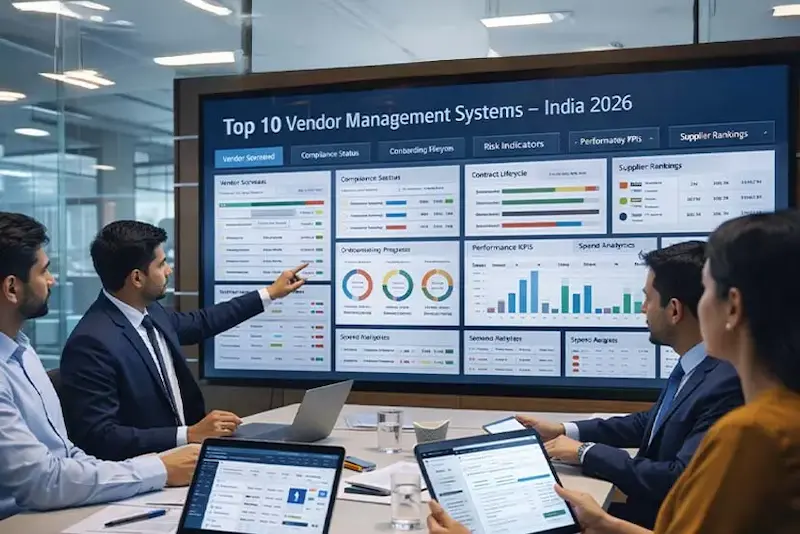
A vendor management system (VMS) is useful for any organization that works with suppliers, contractors, or service providers. It helps different types of users manage vendors more efficiently and improve business operations
Small Businesses
Small businesses can use a VMS to organize vendor data, manage payments, and reduce manual work. It helps them save time and control costs even with limited resources
Medium and Large Companies
Companies with multiple vendors need a structured system to manage complex operations. A VMS helps them track performance, handle contracts, and improve efficiency
Procurement Teams
Procurement professionals use a vendor management system to select vendors, manage contracts, and ensure smooth purchasing processes
Supply Chain Managers
Supply chain teams rely on VMS to monitor vendor performance, manage deliveries, and reduce delays in operations
Finance and Accounting Teams
Finance teams use VMS to track invoices, manage payments, and maintain accurate financial records
Project Managers
Project managers use vendor management systems to coordinate with vendors, track progress, and ensure timely completion of projects
E-commerce Businesses
Online businesses that depend on multiple suppliers use VMS to manage orders, inventory, and vendor relationships effectively
Manufacturing Companies
Manufacturers use vendor management systems to manage raw material suppliers, ensure quality, and maintain production flow
Service-Based Businesses
Companies offering services like IT, marketing, or consulting use VMS to manage external vendors and freelancers
Growing Startups
Startups can use VMS to build organized vendor processes from the beginning and scale efficiently as the business grows
Overall, a vendor management system is valuable for any organization that wants to manage vendors better, reduce risks, and improve efficiency in 2026
What is a vendor management system?
A vendor management system is a tool that helps businesses manage vendors, track performance, handle contracts, and manage payments
Why is a vendor management system important?
It helps improve efficiency, reduce costs, manage risks, and build better vendor relationships
Who can use a vendor management system?
Businesses of all sizes, including small companies, large organizations, and startups, can use it
Conclusion
A vendor management system (VMS) is a powerful tool that helps businesses manage vendors in a simple, organized, and efficient way. It brings all vendor-related activities—such as selection, communication, contracts, and payments—into one place
By using a vendor management system, businesses can save time, reduce costs, improve vendor performance, and minimize risks. It also helps build strong relationships with vendors through better communication and transparency
In 2026, as businesses continue to grow and rely on multiple suppliers, having a reliable vendor management system is more important than ever. It not only improves daily operations but also supports long-term success and business growth
Adopting the right VMS can give your business a competitive advantage and help you stay organized, efficient, and ready for future challenges